

A cooking tent for camping can make outdoor meals more comfortable by providing shade, ventilation, and protection from insects. Whether you are preparing breakfast, grilling dinner, or organizing a family campsite, having a dedicated outdoor shelter can make cooking more enjoyable.
Choosing the right shelter is important because not every camping tent is designed for cooking. Some models offer screened walls, while others provide additional living space, weather protection, and room for camping equipment.
In this guide, we review four outdoor shelters that can help create a more organized camping setup. We also explain what to cook while Tent for Camping, important safety considerations, and how to make your outdoor experience more enjoyable.
Cooking Tent for Camping: Product Comparison Table
| Product | Main Advantage | Capacity | Best Use |
|---|---|---|---|
| EAST OAK Screen House | Quick setup and mesh ventilation | 4–6 people | Outdoor dining |
| Coleman Skylodge | Spacious screened porch | Family-sized | Family camping |
| Gazelle T4 Overland | Fast hub-style setup | 4 people | Overlanding |
| Alvantor Pop-Up | Lightweight fiberglass frame | 4–6 people | Portable shelter |
1. EAST OAK Screen House Tent Pop-Up, 10 x 10 FT
The EAST OAK Screen House Tent is a practical option for campers who want a spacious, ventilated outdoor shelter. Its 10 x 10-foot design provides enough room for several people to sit together, organize camping supplies, and enjoy meals away from mosquitoes and other insects.
One of its biggest advantages is its four-sided D33 fine mesh design. The mesh walls provide 360-degree ventilation while helping prevent insects from entering the shelter. This is especially useful during summer Tent for Camping trips when mosquitoes can make outdoor dining uncomfortable.
Key Features
- 10 x 10-foot spacious screen house.
- D33 fine mesh walls for insect protection.
- 360-degree ventilation.
- UPF 50+ sun protection.
- Quick pop-up installation.
- Reinforced steel structure.
- Includes carrying bag, stakes, guylines, and sandbags.
- Suitable for approximately 4–6 people.
Pros
- Spacious interior for outdoor dining.
- Excellent ventilation through mesh walls.
- Helps protect against mosquitoes and insects.
- Quick installation and convenient storage.
- Provides useful sun protection.
Cons
- Not designed as a waterproof shelter.
- Privacy panels are not included.
- Not recommended for strong winds.
- Cooking appliances should not be operated inside.

2. Coleman Skylodge Camping Tent with Rainfly and Screened Porch
The Coleman Skylodge Tent for Camping is designed for family camping and offers more than a traditional sleeping tent. Its standout feature is the 5 x 10-foot screened porch, which provides additional space for relaxing, storing equipment, and enjoying outdoor activities.
For campers who need a larger setup, this design offers useful flexibility. The screened porch can serve as a comfortable dining and relaxation area, helping separate the main sleeping space from the campsite’s everyday activities.
Key Features
- 5 x 10-foot screened porch.
- Spacious family-sized interior.
- Fits up to four queen-size airbeds.
- Color-coded poles and sleeves.
- WeatherTec protection system.
- Rainfly and taped seams.
- Frame tested for winds up to 35 mph.
- Mesh storage pockets.
- Electrical access port.
Pros
- Large interior for family camping.
- Screened porch provides additional living space.
- Helpful weather-resistant design.
- Color-coded poles simplify installation.
- Useful storage and electrical access features.
Cons
- Requires more campsite space than smaller shelters.
- Larger size can make transportation less convenient.
- The screened porch is not a dedicated cooking area.
- Proper ventilation and weather precautions are still necessary.

3. Gazelle T4 Overland Edition GT401GR Pop-Up Camping Hub Tent
The Gazelle T4 Overland Edition is a convenient shelter for campers who value quick setup, spacious interiors, and portable equipment. Its hub-style design makes it particularly attractive for overlanding trips and outdoor adventures.One of its most useful features is its quick setup system. The manufacturer describes the tent as offering an approximately 90-second setup, helping campers spend less time assembling equipment and more time enjoying their surroundings.
Key Features
- Pop-up hub-style tent design.
- Approximately 90-second setup.
- Four-person capacity.
- 78-inch interior height.
- 300D Oxford weave polyester footprint.
- Upgraded all-terrain stakes.
- Reflective guylines.
- Oversized water-resistant carrying bag.
Pros
- Fast and convenient setup.
- Comfortable interior height.
- Suitable for overlanding and family camping.
- Includes a protective footprint.
- Useful carrying bag for transportation.
Cons
- Takes up more storage space than smaller shelters.
- Designed primarily as a camping shelter rather than a cooking tent.
- Requires proper anchoring.
- Cooking equipment needs a separate outdoor location.

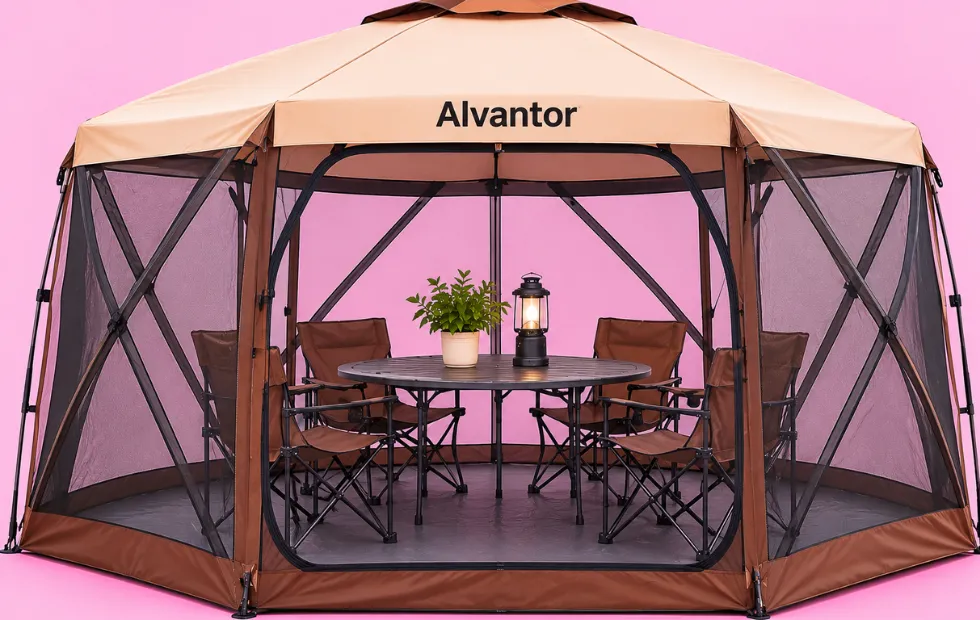
4. Alvantor Pop-Up Screen House Tent with Mosquito Netting
The Alvantor Pop-Up Screen House is another useful choice for campers who want a lightweight outdoor shelter. Its hexagonal design provides a spacious area for outdoor dining, relaxing, and enjoying time with friends or family.One of its biggest advantages is its lightweight fiberglass frame. The manufacturer describes the 4–6-person model as weighing approximately 15 pounds, making it easier to carry than many heavier screen shelters.
Key Features
- Approximately 10 x 10-foot interior.
- 7-foot height.
- Lightweight fiberglass frame.
- Approximately 15-pound weight for the 4–6-person model.
- Six mesh wall panels.
- 360-degree ventilation.
- UPF 50+ sun protection.
- Automatic pop-up design.
- Includes sandbags, guylines, and metal stakes.
Pros
- Lightweight and portable.
- Spacious design for outdoor activities.
- Helps keep insects away.
- Good ventilation.
- Quick setup and folding.
- Includes useful anchoring accessories.
Cons
- Not waterproof or rainproof.
- Not suitable for strong winds.
- Floor is sold separately.
- Not designed for cooking appliances inside.
Final Thoughts
Choosing the right cooking tent for camping can improve your outdoor dining experience by providing shade, ventilation, and protection from insects. The EAST OAK and Alvantor screen houses are useful for portable outdoor dining, while the Coleman Skylodge offers additional family living space. The Gazelle T4 is an attractive choice for campers who value quick setup and overlanding convenience.
Each product has different strengths, so consider your group size, transportation needs, and expected weather before making a decision.
Remember that these shelters are designed for outdoor living and relaxation, not enclosed cooking with fuel-burning appliances. Keeping your cooking station separate from your tent is essential for a safer and more enjoyable Tent for Camping trip.
Frequently Asked Questions (FAQs)
What to Cook While Tent Camping?
Tent for Camping meals do not need to be complicated. With a little preparation, you can enjoy delicious food without carrying an entire home kitchen.
Here are some easy meal ideas:
1. Breakfast Burritos
Prepare eggs, cheese, potatoes, and cooked vegetables before leaving home. Store the ingredients safely in a cooler and heat them outdoors when needed.
2. One-Pot Pasta
Pasta is convenient for camping because it requires only a few ingredients. Add tomato sauce, vegetables, cheese, or cooked chicken for a filling meal.
3. Grilled Vegetables
Bell peppers, onions, zucchini, and mushrooms are easy to prepare on a suitable outdoor grill.
4. Campfire Foil Packets
Combine potatoes, vegetables, seasonings, and your preferred protein in foil packets. Cook them over an appropriate outdoor heat source while following food safety guidelines.
5. Pancakes
Pancakes are a simple breakfast option. Prepare the dry ingredients at home and mix them with the wet ingredients at your campsite.
Always keep perishable food properly chilled and use separate utensils for raw and cooked ingredients.
What to Know About Hot Tent Camping?
Hot Tent for Camping is a type of cold-weather camping where a specially designed tent accommodates a compatible wood-burning stove.
Unlike an ordinary camping tent, a hot tent typically includes a stove jack, which is a heat-resistant opening designed for a stove chimney.
This setup can provide warmth and make winter Tent for Camping more comfortable. However, hot tent camping requires additional preparation and careful attention to safety.
Important Things to Know
- Choose a tent specifically designed for hot tent use.
- Use only a compatible stove and chimney system.
- Maintain the manufacturer’s required clearances from tent walls.
- Install the stove correctly through the designated stove jack.
- Keep adequate ventilation.
- Never leave a burning stove unattended.
- Use a carbon monoxide alarm where appropriate.
- Allow ashes and equipment to cool before handling or packing.
A regular screen house or pop-up shelter is not a substitute for a properly designed hot Tent for Camping. The four products reviewed above should be treated as outdoor shelters rather than hot tent cooking systems.
You may also like Camping Fork and Spoon
What Are Some Good Questions to Ask While Camping?
Tent for Camping is a great opportunity to connect with friends and family. Asking interesting questions can make conversations more enjoyable, especially around the campsite during dinner or in the evening.
Here are some useful questions:
- What is your favorite camping memory?
- Which outdoor destination would you love to visit?
- What is the best meal you have ever cooked outdoors?
- Would you rather camp beside a lake or in the mountains?
- What is one camping skill you would like to learn?
- What is your favorite outdoor activity?
- What would you bring if you could pack only five camping essentials?
These questions can help everyone participate in conversations and enjoy the Tent for Camping experience.
What Are 5 Good Questions to Ask?
If you want simple conversation starters, these five questions work well for almost any Tent for Camping group:
- What is your favorite thing about camping?
- What is the most adventurous thing you have ever done?
- Which country would you love to explore?
- What is your favorite food to prepare outdoors?
- What would your perfect weekend camping trip look like?
These questions are easy to answer and can lead to interesting conversations.
What’s Good for Camping?
Good Tent for Camping equipment makes outdoor adventures easier and more comfortable. The right supplies depend on the destination, weather, and length of your trip.
Some useful camping essentials include:
- A suitable sleeping tent.
- Sleeping bags and sleeping pads.
- A camping stove for safe outdoor cooking.
- Cooking pots and utensils.
- Reusable plates and camping mugs.
- A cooler for perishable food.
- A first-aid kit.
- A flashlight or rechargeable lantern.
- Drinking water and water purification equipment.
- A screened shelter for outdoor dining.
A well-organized campsite helps reduce unnecessary stress and allows everyone to enjoy their time outdoors.
How to Make Camping Fun?
Camping becomes more enjoyable when you combine good preparation with activities that everyone can participate in.
Start by choosing a suitable campsite with enough space for your tent, cooking equipment, and outdoor activities. Organize your supplies before leaving home so you do not waste time searching for essential items.
You can also make Tent for Camping more exciting with simple activities.
Try These Camping Activities
- Organize a family outdoor cooking competition.
- Play card games or board games.
- Explore nearby hiking trails.
- Watch the sunset together.
- Tell interesting stories around the campsite.
- Take nature photographs.
- Prepare a special outdoor breakfast.
- Enjoy stargazing when the weather is clear.
A comfortable screened dining area can also make group meals more enjoyable, especially when insects are a problem.
What Are Some Good Questions to Ask Adults?
Adults often enjoy conversations about travel, experiences, personal interests, and future adventures. Camping provides a relaxed environment for meaningful discussions.
Here are eight questions you can ask adults during a camping trip:
- What is the most memorable trip you have ever taken?
- What life experience taught you an important lesson?
- If you could live anywhere for one year, where would you go?
- What outdoor adventure would you like to experience?
- What is one skill you wish you had learned earlier?
- What is your favorite childhood memory?
- What is the best advice someone has given you?
- What would your ideal camping holiday look like?
These questions can help create meaningful conversations and make time around the campsite more memorable.
How to Choose the Best Cooking Tent for Camping
Before buying a cooking tent for camping, consider how you plan to use the shelter. A product that works well for a family picnic may not be the best choice for overlanding or a large camping group.
1. Size and Capacity
Check the interior dimensions and recommended capacity. A 10 x 10-foot screen house can provide useful space for outdoor dining, chairs, and camping supplies.
2. Ventilation
Mesh walls allow fresh air to circulate and help reduce insect problems. Good ventilation is particularly useful when several people are sitting together.
3. Weather Protection
Check whether the shelter offers rain protection, UV protection, or only insect protection. Do not assume that a screened shelter is waterproof.
4. Setup and Portability
Pop-up designs can save time during campsite setup. Also consider the packed dimensions and carrying weight before purchasing.
5. Stability
Look for included stakes, sandbags, and guylines. Proper anchoring is important, and shelters should be taken down when conditions exceed their recommended limits.
6. Cooking Safety
Most importantly, remember that a screen house is not automatically a cooking tent. Keep flames, grills, and fuel-burning appliances outside the shelter in a safe, open location.
1. What is the best cooking tent for camping?
The best option depends on your needs. The EAST OAK Screen House is a practical choice for outdoor dining, while the Coleman Skylodge offers additional space for family camping.
2. Can you use a camping stove inside a screen tent?
You should not operate a fuel-burning camping stove inside a screen tent. Use the stove outdoors in a suitable open area to reduce fire and carbon monoxide risks.
3. Are screen houses good for camping?
Yes. Screen houses provide ventilation, shade, and protection against insects. They are useful for outdoor dining, relaxing, and organizing Tent for Camping activities.
4. What size screen tent is best for family camping?
A 10 x 10-foot shelter can work well for a small family or group. Larger families may need additional space for chairs, tables, and Tent for Camping equipment.
5. Can a camping screen tent protect against rain?
Some screen Tent for Camping offer limited weather protection, but many are not waterproof. Always check the manufacturer’s specifications before using one in rainy conditions.
6. What should I look for in an outdoor cooking shelter?
Look for good ventilation, sufficient space, insect protection, UV protection, portability, and a stable frame. Most importantly, keep cooking appliances outside the shelter.
7. What is the difference between a screen house and a regular camping tent?
A screen house generally has mesh walls designed for ventilation and insect protection. A regular Tent for Camping is primarily designed for sleeping and weather protection.
8. Is hot tent camping suitable for beginners?
Beginners can enjoy hot Tent for Camping with proper equipment and preparation. However, learning stove operation, ventilation, chimney installation, and fire safety is essential before starting.
1 Comment
[…] Also read Cooking Tent for Camping […]